
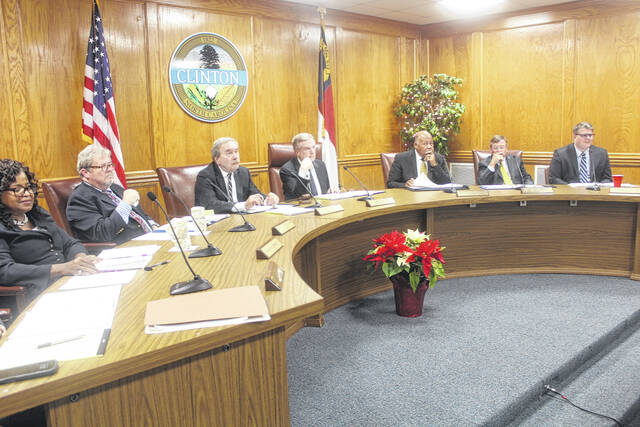
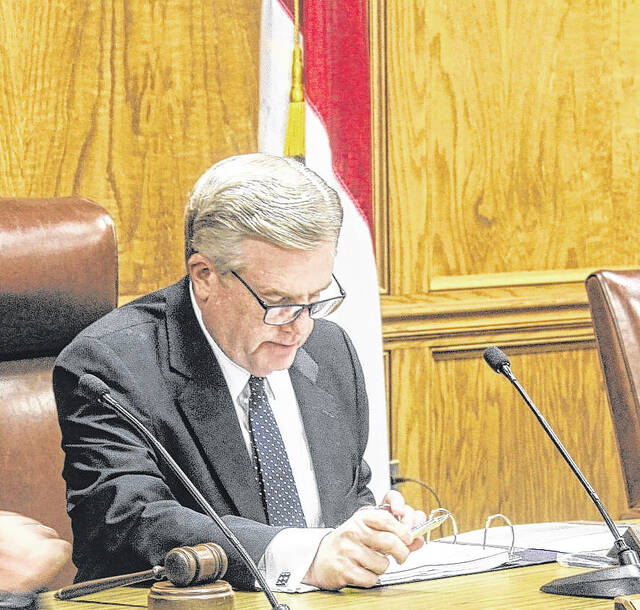
On Dec. 2, the Clinton City Council voted to proceed with Phase IV of the city’s revitalization plan while putting the Alive After Five stage project on hold until a newly formed committee could bring needed information back to the board.
At that meeting, Mayor Lew Starling announced that the city would be moving ahead with the next phase of their downtown revitalization, which seeks to restore the city’s damaged buildings and assets and assist in overall rejuvenation. However, the future of the city’s highly requested stage project still lies in question.
“We were asked to get some information and we did just that,” said Starling last Tuesday night. “In essence, there is no question about continuing with the rest of the revitalization project we call ‘Phase IV.’ However, there is still some question about the stage.”
That project would see a stage being built for events such as Alive After Five, which would be placed at the SECU ATM next to the City Market. Last month, the council entertained a discussion of amending the scope of the downtown revitalization project which originally included the stage. This discussion was heavily opposed by some members of the community, including Greg Thornton and Kay Raynor of the Clinton Main Street program.
“Our position is held firmly that you guys have approved to proceed with this project as it is a first class project that we’ve always put out together,” said Thornton. “That’s what we’d like to do now. We don’t support the changes.”
Following this, the board was in agreement to take another look at the grant they received for the stage and some of the projects to figure out the best course of action, but to still separate the stage from the revitalization project as long as it would not impact the grant status.
According to the mayor, the city’s grant, in the amount of $237,000, will partially go toward design of the stage. Design plans for the stage originally included a shelter overhead with the city’s logo on it. The council has now received renderings of what the stage would look like, in addition to cost estimates. The stage was estimated to cost a half million dollars, so, while the grant would pay for some, the city would still have dip into its coffers for roughly $300,000 of the stage’s total cost.
“We were asked to look further into that,’ said Starling. “We spoke with Jerry Milton who works with Southeastern Interiors and asked him to take a look at it. His thinking was that the engineering would cost $100,000 and then about $315,000 which is still a big number.”
The mayor then asked to see some cheaper renderings which would cut some of the stage’s more elaborate design elements.
“I don’t think anyone in this room or on this board would be proud of those renderings,” said Starling. “There’s no question that we’re under a time crunch and nobody wants to reach to the $500,000, but the bottom reach is just not good. Nobody would be happy with that. I am also told that the first rendering we received would not be able to accommodate an event. It doesn’t have the capabilities for that.”
In addition, while canned lighting for the stage is included in the cost, standard stage lighting is not. Councilman Neal Strickland also raised the issue that the city would have to host a good amount of events at the stage to make up for its $500,000 cost, and he noted that rentals might be cheaper.
While no action was taken at the meeting, Starling created a committee consisting of newly elected Councilman Joel Rose, City Manager J.P. Duncan, Thornton and Debbie Roberts of the Historic Preservation Commission, along with Sampson County Economic Development Director Ray Jordan. The committee was asked to gather as much information as possible on the project with time being of the essence. They will report back to the board by the council’s January meeting.
“This has to see some action at the January meeting,” stressed Starling. “We must take action at that time.”