
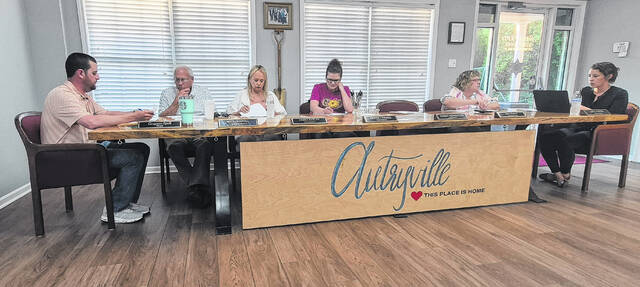
Autryville Board of Commissioners has approved plans to survey the town’s streets in order to determine how much money they will receive from state Powell Bill funds.
The Powell Bill was first introduced in the state of North Carolina in 1951 and provides that city and town streets be part of the state public roads system and would be constructed, reconstructed, and maintained by the State Highway and Public Works Commission from state highway funds. In addition, the bill provided additional money directly to municipalities based on their population and street mileage to maintain, repair, and construct city and town streets that were not part of the state highway system.
In order to determine how much money a municipality can receive from the bill, officials on the town board or city council must first survey their roads.
“We’re required by law to do this survey every year,” said Autryville Mayor Grayson Spell Thursday night. “They basically come in and survey all of our streets, classify them by mileage. Then, they basically give that to the state department to let them know how much money to give us.”
According to the Town Clerk Lisa Jones, Autryville receives roughly $12,000 each year from the Powell Bill. Larger municipalities, such as Clinton or Fayetteville, will likely receive more of an allocation from the bill.
“How it works is, obviously, the more streets, paved streets, you have, the more money you’ll get from the Powell Bill,” explained Spell. “For the past few years, we’ve used Millard Owen of Owen Surveying to help us survey the roads, but he recently passed away and they aren’t doing surveying anymore.”
Spell stated that as a result of Owen’s passing, many other local municipalities have been “scrambling” to find a replacement company to help them complete the survey. Due to this, the town board made suggestions as to what their next step should be.
“We could go the route of getting a bunch of quotes, but everybody that we’ve talked to has said that it’s going to cost us $10,000-$15,000 to do the survey work,” he said. “We don’t really have a choice in this because we are required to have somebody do this.”
Spell suggested using the town’s on-call engineering company, McGill Associates. This would save the town some time, as the company could get started on the surveys sooner and the town wouldn’t have to spend extra time pricing costs from other businesses. Because the town already has an engineering contract with McGill, they wouldn’t have to spend extra time working out additional paperwork.
“They need to get started on this right away so we can have the survey done by the end of the fiscal year,” stressed Spell.
In addition, the town would save more money on the surveying project, with McGill proposing $2,750 to complete the survey. Jones said this proposal was roughly what the town had paid in previous years when using Owen Surveying.
In the end, the board unanimously voted in favor of using McGill Associates to complete the project, citing cost and time efficiency. Spell stated that he would soon reach out to the group to get them started on the project as soon as possible.