
As Sampson County continues to endure prolonged drought conditions and repeated stretches of extreme heat, local agricultural experts say the weather is placing growing pressure on both crops and livestock in one of North Carolina’s most agriculture-dependent counties.
While scattered showers have provided temporary relief in some areas, field crops agent Colden Bradshaw, with the N.C. State Cooperative Extension of Sampson County, said a few days of rainfall are not enough to erase the impact of months of dry conditions.
“The heat is really just exacerbating our drought conditions,” Bradshaw explained. “It’s so dry that there’s no moisture in the ground for plants to take up. With this extreme heat, we’re seeing plants wilt during the day, and, in some cases, they don’t really recover overnight like you would normally expect.”
The combination of high temperatures and limited soil moisture has become particularly concerning for many field crops, while fruit and vegetable growers face additional challenges.
Watermelon producers, for example, are racing against the clock during the hottest days of summer.
“With horticultural crops like watermelons, getting those fruits harvested in a timely manner is really important,” Bradshaw noted. “The heat can burn up those fruits while they’re still sitting in the field.”
Unlike many fruits and vegetables that can be harvested multiple times throughout a growing season, Bradshaw indicated field crops offer producers far less flexibility.
“With field crops, you really can’t just decide to harvest early,” he said. “The crop has to be fully mature and dried down before it can be harvested.”
The weather is also affecting the people responsible for bringing those crops in from the fields.
Bradshaw pointed out that farm workers often must slow their pace during periods of excessive heat while taking additional precautions to avoid heat-related illnesses.
“They may be working slower than usual simply because it’s so hot,” he said. “It’s important they’re staying hydrated, taking frequent breaks and getting into the shade whenever possible.”
Although Bradshaw said he is not aware of a specific temperature cutoff that prevents field work, he noted that employers are encouraged to educate workers on recognizing heat stress while ensuring water remains readily available.
For growers with irrigation systems, the drought presents another difficult balancing act.
“Conserving water is really the big thing now,” Bradshaw remarked. “Some growers are seeing their irrigation ponds dry up and are having to make hard decisions about which crops they continue irrigating and which ones they may have to stop watering to protect another crop.”
Keeping irrigation systems operating throughout prolonged dry periods also creates additional maintenance costs and headaches.
“Maintaining pumps and constantly running irrigation systems becomes another challenge growers have to deal with,” he added.
Although recent years have included periods of drought, Bradshaw believes many producers have begun preparing for increasingly unpredictable weather.
“I think more and more growers are expecting the worst and trying to be better prepared for conditions like we’re seeing this year,” he stated.
The extreme weather is also creating concerns inside Sampson County’s livestock industry, particularly for hog producers.
According to Max Knowles, livestock agent with the N.C. State Cooperative Extension of Sampson County, hogs are especially vulnerable because they do not have functioning sweat glands, preventing them from cooling themselves the same way many other animals do.
“Extended periods of temperatures in the mid-90s coupled with North Carolina’s high humidity are very stressful physically in swine,” Knowles wrote in an agriculture column he referenced during his interview. “It is important that farmers take the necessary steps to help lessen heat stress as much as possible.”
Knowles explained that prolonged heat stress can reduce feed efficiency, slow growth rates and increase mortality if left unmanaged. Farmers closely monitor their animals each day for warning signs, including increased breathing or panting, reduced activity, lower feed consumption and significantly higher water intake.
To help reduce heat stress, Knowles recommends ensuring an abundant supply of clean drinking water, maintaining properly functioning ventilation systems, providing adequate floor space inside barns, and using sprinkler systems correctly to cool animals without increasing humidity.
Some local farmers across Sampson County have expressed extreme concern regarding yields and sustainability.
“August is when most of the telltale signs for sweet potatoes and soybeans and cotton (are),” Kenneth Fann, one of the owners of Fann Farms, said. “That’s the month that we really need rain in. Normally, that’s the rainiest month of the year for us, but it’s normally big rain. So August is the make-or-break month for us. We’re in hopes that we can get some rain later on, so we can still make a decent crop.”
Fann and his son, Robert, have been able to manage despite the extreme conditions.
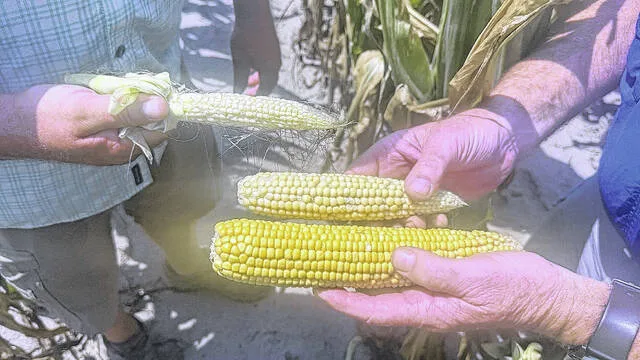
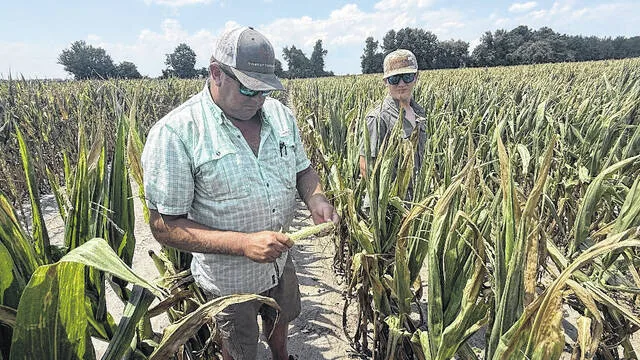
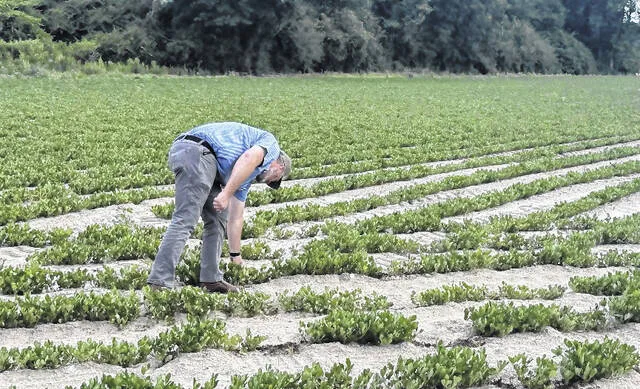
“Everything is doing remarkably well considering what we’re dealing with,” Fann attested. “Corn has probably been hit the hardest. We grow sweet potatoes and peanuts, and they’re hurting, but they haven’t really gotten into their yield-making window just yet.”
On top of what the drought is doing to the farmers and their crops, if things continue as they have been, the impact could be widespread, not just locally.
“It’s not going to be the impact that you think it’ll be in the grocery store,” noted Jay Sullivan, owner of Sullivan Farms on Giddensville Road. He farms with his son Jarman and grandson Will.
“It is going to be on the people that are dependent upon what we’re doing, who are not going to have the disposable income to be able to spend within the county for food. That’s the short-term effect. If it’s nationwide, you will begin to see it in the actual cost of the food that you’re buying, whether it’s pork or it’s being fed. All of the corn that you see in Sampson County or the state alone is fed to hogs, chickens, or turkeys. We’re a corn-deficit state; we don’t produce the amount of corn here that it takes to feed all our livestock.”
The best advice that both Fann and Sullivan could offer was to pray.
“It’s about the only thing you can do,” Sullivan admitted. “It’s the same all the way across the county.”
Jarman added. “It’s a tough time in agriculture throughout.”