
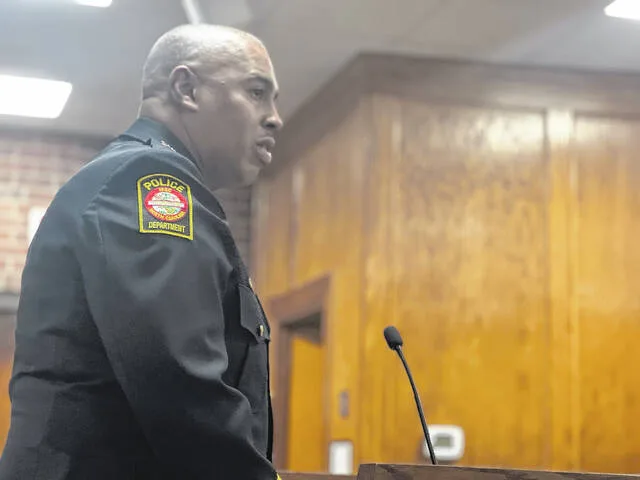
Several Public Works projects are currently underway in Clinton to help support the city’s long-term efforts to improve infrastructure reliability, meet regulatory requirements, and plan responsibly for future water, wastewater, and stormwater needs. Police Chief Adrian Mathews provided an update on those projects to the City Council this past Tuesday evening.
Water Meter
Replacement
The water meter replacement project began several years ago, Mathews said, replacing residential and commercial water meters within the city limits. The new and advanced meters, called Automatic Meter Readers, provide a digital reading that’s displayed on the outside of the meters, allowing Public Works staff to often check readings without having to exit their vehicle.
Mathews told Council that as of Aug. 4, 73 percent of residential meters have been completed. Over the next several weeks, staff anticipate beginning the installation of larger commercial meters. Mathews advised that some commercial customers could potentially see bill increases.
“Because of the existing commercial meters that have been in service for more than 20 years, some high-volume customers may experience billing increases after the new meters are installed, due to improved measurement accuracy.”
A potential fixed network metering system is also being evaluated, which would allow customers to monitor water usage, establish usage thresholds, receive leak notifications, and help the city identify social leaks more effectively.
Water and wastewater
rate study
Mathews said that a water and wastewater rate study is currently being conducted to help ensure rates are sufficient to cover operating and capital costs, maintain service quality, while remaining affordable for customers.
The North Carolina Rural Water Association is performing this study “at no cost to the city,” he explained.
Treatment plant
resiliency project
Mathews also mentioned that the wastewater treatment plant resiliency project is nearing completion at the Norman H. Larkin Wastewater Treatment Plant.
That project, he said, represents a major investment in the long-term reliability, resilience, and sustainability of the city’s critical wastewater infrastructure. The project began in July 2023 and includes upgrades to the plants’ power control and generator system, which will allow the facility to remain operational during primary power failures.
“Staff is evaluating options to improve treatment capacity and sludge removal, particularly in response to biological oxygen demand, total suspended solids, and ammonia loading associated with four large industrial users,” Mathews explained.
He added that potential funding for the treatment plant through the Clean Water State Revolving Fund program is also being reviewed.
Upon completion, the resiliency project will provide enhanced flood protection, improved electrical reliability, robust emergency power capabilities, and the operational flexibility necessary to serve the community’s needs “well into the future,” Mathews summarized.