

See related story on A2
The Sampson County Board of Education approved, by a 4-3 vote, a motion Monday evening concerning grading expectations, a topic previously discussed during the board’s work session last week.
The newly adopted policy states: “The Sampson County Board of Education shall not establish or require a minimum grade that exceeds the grade actually earned by a student. No district-wide or school-wide policy, practice, guideline, procedure, expectation, or directive shall require or direct a teacher to assign or record a minimum grade higher than the grade earned by the student.”
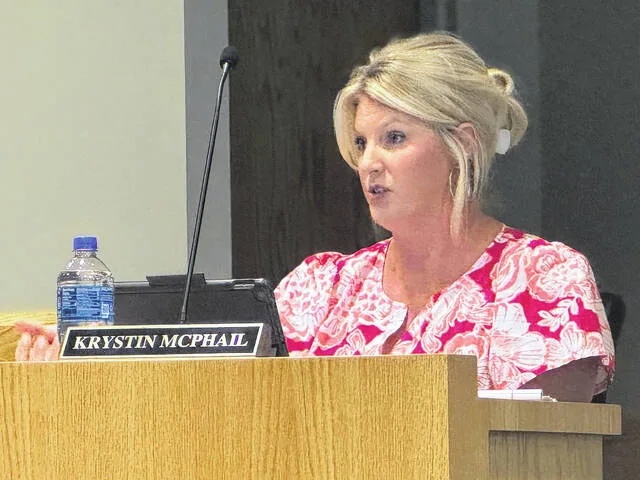
Board chairman Daryll Warren, vice chairwoman Jennifer Naylor and board members Michael Elmore and Krystin McPhail voted in favor of the measure. Board members Eleanor Bradshaw, Glenn Faison and James Jones voted against.
Warren noted that nothing in the provision should be construed to restrict the lawful authority of school principals to grade and classify individual students.
“Any exercise of such authority shall be based upon the individual circumstances and education interests of the student, and shall not be used to establish or implement a school-wide or district-wide minimum grade requirement,” the board chairman further stated. “Principal authority under this provision shall be exercised on a student-specific basis, and shall not be used to require the systematic adjustment of grades to a predetermined one.”
Naylor, who was adamant changes needed to be made during the work session, talk again about her reasoning.
“For me, this is all about academic accountability, transparency, and just making sure that our grades are accurately communicating where the students are academically,” explained Naylor, who served in public education for 13 years, both in the classroom and as an assistant principal.
She stressed that she wanted to be clear about what the proposed policy would mean for students.
“This is not about taking away second chances, and this is not about taking away or not supporting our students,” Naylor stated. “Our schools already do that; our teachers are already providing interventions, accommodations, and individualized support. We have so many great educators that are diving in and working with these individuals and their needs.”
The vice chair also expressed appreciation that Superintendent Dr. Jamie King sent surveys to high school principals seeking feedback regarding grade floors for students.
“I think, probably, what you’ll notice from most of these,” Warren remarked to the board, “is there is an overwhelming support for a grading floor.”
Warren also acknowledged concerns raised in the survey responses.
McPhail, a former educator, discussed her experience with minimum grades in Sampson County Schools.
“One of the things I would like to mention is for as long as I have been in Sampson County Schools, we were always asked to give a 50 if the minimum grade was lower,” McPhail recalled. “However … that was never a written policy or procedure.”
She also discussed how she believes the proposed policy could impact administrators and teachers.
“Now, looking at potentially giving our administrators and our teachers a little more autonomy — even though it seems like it doesn’t sound that way — being able to truly support an individualized approach for each and every student, to me, could be very beneficial,” McPhail explained.
Naylor highlighted concerns raised by some principals regarding accountability, student motivation, student effort, teacher buy-in, whether students might rely on receiving a 50 and whether a grade floor accurately communicates student performance.
“One comment really stood out to me from a principal, and it said, ‘Supporting struggling students is absolutely necessary, but support and accountability aren’t opposites,’” Naylor shared. “We can provide these opportunities and we do provide these opportunities to reassess, tutor, intervene, have intervention skills in place, and to recover that grade without removing the connection between the performance and the actual grade.”
Naylor said she believed the distinction was important when considering how the district addresses students who are struggling academically.
“Have we actually addressed the learning gap or have we simply made the grade easier to recover? I think that’s significant to think through, too,” she emphasized. “The goal is for our kids to learn and contribute successively to society, and we have got to address the learning gap. Not simply change the grade to make it easier to recover.”
Naylor made the motion concerning the proposed policy, which was seconded by McPhail. The motion passed 4-3.
The proposed policy will now undergo a mandatory 30-day review period before it can return to the board for final approval.