
Four people from Sampson County — and counting — have been awarded Big Idea Grants to fund unique projects at Clinton High School, Sampson Middle School and Union middle and high schools.
Applications remain open through Oct. 4 for North Carolina students in fifth through 12th grades and anyone who defines themselves as an educator.
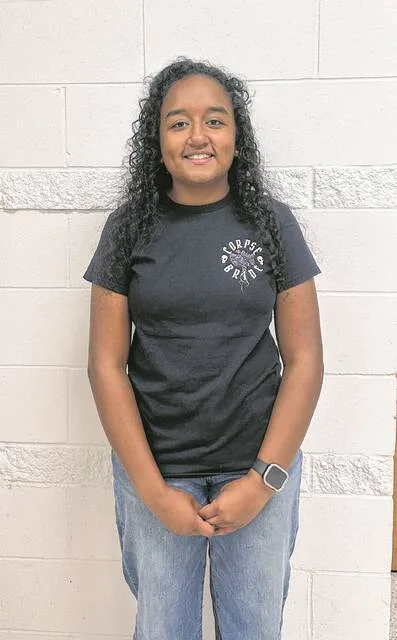
Clinton High School junior Alexa Herrera had the idea to start a debate team, believing it would provide an opportunity for her and her peers to build skills needed for college and careers, she said during an interview Wednesday morning.
Herrera was talking with her older sister, Jessy, a Simple Gifts scholar, about the idea when her sister suggested she speak with Simple Gifts Coordinator Margaret Turlington. Turlington then told Herrera about the Big Idea Challenge.
The challenge is an initiative of Exponential Scholars, a new North Carolina education nonprofit founded on the belief that talent is everywhere and opportunities should be available to help develop it. The Big Idea Challenge is the organization’s first initiative.
Applications are being accepted continuously through Oct. 4, and Herrera said she heard back even faster than the program’s website indicated.
“I think I heard back in two or three days,” the junior said.
Herrera emphasized the simplicity of the process, saying, “All you have to do is what the website says, talk to the judges like you were talking to a friend.”
Right now, Herrera is working to build the foundation of the debate team.
“We have to learn how to debate first,” she emphasized.
Herrera has completed the first step of finding a club adviser, Clinton High English teacher Ben Casey. The team plans to meet weekly or every other week, and she is now working to recruit its members.
“I’m working on it,” Herrera said. “My friend wants to be a lawyer, and I told her you’re going to have to know how to debate.”
Fellow Clinton High student Caesar Cruz is Herrera’s co-founder.
“I didn’t know how much we needed it until I started,” Herrera said of the opportunity the grant has made possible.
“I want everybody to have the chance to build those skills and confidence,” she added, encouraging anyone with an idea they want to put into action to apply.
Another member of the Clinton High community was awarded a $1,000 grant — this time, an educator.
English teacher Iris Bryant said when she learned of the opportunity, she thought about a project she completed in middle school that continues to have an impact on her today.
In 1985, Bryant was assigned to interview an elder in her community.
“I still remember things I learned in that interview,” she said.
That experience led to Bryant’s idea for a podcast assignment for her English III students.
“They will interview an elder in the community, which I believe will not only help the students by what they learn, but also remind the elders how vital they are as well,” Bryant explained.
“Elders have a lot to offer,” the teacher emphasized.
Bryant said she believes it is important for elders to know how much they matter and for younger generations to benefit from their wisdom. She also pointed to the power of storytelling and the impact personal stories can have on others.
Bryant hopes the project will inspire her students while preserving the personal histories of the elders they interview.
The project is planned for late October or early November, with the Big Idea Grant providing equipment needed to record the podcasts.
“I am grateful for the support of our admin team, and the encouragement to think outside the box and model that for our students,” Bryant said.
At Sampson Middle School, band director Kaitlyn Faircloth was also awarded a grant through the challenge, which she plans to use to take her eighth-grade students to Washington, D.C. Her path to receiving the grant, however, came after her first application was turned down.
“A mentor of mine shared the grant, I did some research, and saw it was easy to apply,” Faircloth said during a phone interview Thursday. “And the first time I was actually turned down.”
“They wanted clarity, so I took the judges’ feedback and resubmitted,” she continued. “And this time I was awarded the grant.”
Faircloth explained that her students will celebrate America’s 250th anniversary with music from throughout American history during their spring concert. The eighth-graders are playing a Smithsonian Suite, she said, making the opportunity to visit the museums a chance to “bring the music to life.”
Faircloth said her students are excited about the opportunity. She encouraged educators and students considering applying to “just go for it.”
Even if an application is not initially chosen, Faircloth said the judges are “super helpful” and ultimately want to clearly understand the applicant’s idea, asking questions such as, “Can you tell us more about this?”
At Union Middle and High schools, Lori Morgan was awarded a Big Idea Grant to help support the band program amid funding cuts.
“There is now no music budget past fifth grade, and I am teaching at the intermediate school because there’s no band teacher position anymore,” Morgan said, explaining that she and others are working to keep band available for Union students.
“We go to the high school band room for practice,” she said, noting that doing so requires transportation expenses and other costs that were previously included in middle and high school education budgets.
Morgan expressed gratitude for the grant, saying opportunities like the Big Idea Challenge are vital to “keeping band alive at Union.”
“I do whatever it takes,” Morgan emphasized, saying students deserve the opportunity to participate in band and that she does not want funding limitations to prevent them from having that chance.
Morgan also praised the grant opportunity because “students and teachers can get it,” encouraging others to apply and adding, “The more interesting the video the better.”
“Winning won’t be easy, but participating should be” is the tagline of the Big Idea Challenge, and Exponential Scholars founder Holly May emphasized that philosophy during a phone interview earlier this week.
“We’ve specifically told the judges not to pay attention to a shaky camera due to nerves, or not the best lighting,” May said, emphasizing that the challenge is about the “big idea” and having a “clear path forward” for bringing it to life.
May said every submission will receive feedback, whether it is selected for funding or not, and she encouraged unsuccessful applicants to use that feedback and resubmit.
She also explained that “anyone who defines themselves as an educator,” along with students in fifth through 12th grades, is invited to apply.
May said educators could include daycare professionals, college students studying education and many others, with the broad definition intended to encourage different types of educators to participate.
Submissions are being scored on a rolling basis, meaning applicants do not have to wait until the deadline to receive feedback.
Applications will be accepted through Oct. 4.