
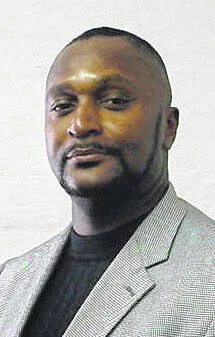
Sampson County Board of Education member Glenn Faison is taking his advocacy for local students into a statewide conversation after being selected for the sixth cohort of the North Carolina Hunt State Policy Fellows program.
Faison, who also serves as executive director of Project Outreach Inc., is one of 24 local elected leaders from across the state chosen for the bipartisan program, which brings together officials to examine education policy and explore ways to improve outcomes in their respective communities.
For Faison, the opportunity ultimately comes back to a goal he has long emphasized locally — making sure Sampson County students have access to the resources and opportunities they need to compete regardless of their circumstances.
“I just think it’s a great opportunity to be selected and have the opportunity to continue to do work for our children,” Faison said.
The Hunt Institute announced the sixth cohort in late August, selecting school board members, county commissioners, mayors, municipal officials, law enforcement leaders and others representing communities from across the state.
Faison acknowledged he was initially skeptical when he learned about the opportunity and nearly turned it down.
“I almost, at first, turned it down because I thought it was something bogus, to tell you the truth,” he recalled. “But as I did my research, and they made some phone calls and we did some virtual meetings, I understood the importance of it and the magnitude of being selected.”
That understanding grew after Faison attended the cohort’s first gathering in Asheville. Additional sessions are scheduled as fellows continue discussions centered on education and public policy.
According to The Hunt Institute, participants will examine issues like early childhood education, K-12 schools, postsecondary attainment and workforce development. Fellows also engage with policymakers, educators and other experts while exchanging perspectives with leaders from rural and urban communities across North Carolina.
Among those topics, Faison pointed to early childhood and K-12 education as areas where he sees particular potential for an impact locally because of the connection between the two.
“The preschool and the K-12, of course,” Faison explained. “Preschool because it sets the tone for our young people.”
Faison would like to see greater attention given to funding early childhood education, arguing that a strong educational foundation before kindergarten can have lasting effects as children progress through school.
“I wish the Legislature would be more proactive with the funding for preschool,” he noted. “We have preschool on our campuses, but they’re sort of funded differently, and I don’t think they’re always given the same attention as K-12.”
The importance of that foundation can become evident as students advance through elementary school and begin facing standardized testing and other academic benchmarks, Faison added.
“The preschool component is very important to me, as is K-12,” he emphasized. “I really think they coincide. They go together. In my opinion, you can’t be successful with the latter, K-12, if you’re not successful in preschool.”
Faison’s interest in education extends beyond his position on the school board. Through Project Outreach, he has worked with young people and families in the community, an experience he believes influences his desire to “level the playing field” for Sampson County students.
Looking back on his own upbringing, Faison recalled growing up in a household that was not wealthy but where his mother and father made sure their children had what they needed to succeed. He worries some children today may not have the same support or opportunities.
“I see young people that look like myself and other young people that maybe didn’t have the same opportunity,” Faison shared. “Just give them an opportunity to be educated and have a fair opportunity to succeed in life.”
That perspective also shapes how Faison approaches his work on the Board of Education, particularly when hearing concerns from parents and community members who may feel their voices are overlooked.
“I make it a point to make sure I take every call, listen to every concern, and I try to address every concern if it’s valid,” Faison stressed.
He likened his role to that of a quarterback, taking an issue brought to him and directing it to the person best positioned to address it.
The Hunt State Policy Fellows program began in North Carolina in 2021 and has since expanded into other states. The program is designed to expose local leaders to education policy issues while encouraging bipartisan discussion and collaboration.
Faison hopes the experience ultimately produces more than conversations. When the fellowship concludes, he wants participants to return home with strategies they can put to use alongside school boards, county commissioners, community organizations and faith-based leaders.
“I pray that, from the fellowship, we will be able to compose a game plan that reflects our individual counties that we can bring back to our individual commissioners, board members, community leaders, including faith-based leaders, and we can work together,” he said.
For Faison, bringing that knowledge back to Sampson County means finding additional resources and opportunities for students while making sure children in a rural community are equipped to compete with their peers anywhere.
He pointed to students in larger areas such as Mecklenburg and Wake counties — and even beyond North Carolina — when explaining what he means by leveling the playing field. Regardless of ZIP code, family circumstances or the size of the community they call home, Faison wants Sampson County students to have opportunities available to them.
“Make everything accessible to our young people,” Faison emphasized, “so they can have a fair chance at succeeding in life.”