
Denise Scronce is a mother, a grandmother, and a former educator. She enjoys spending time with her family at White Lake, being a member of Lake Church, playing the piano, holding a physical book in her hands, and recently, playing Mahjong. Scronce is also a breast cancer survivor, which, she says, changed her life for the better.
It was 2014, and Scronce and her sister, Cindi Norris, were running Burney’s in downtown Clinton. The retired educator suspected she might have the disease, but she wanted to be certain about her diagnosis before telling anyone, even her sister.
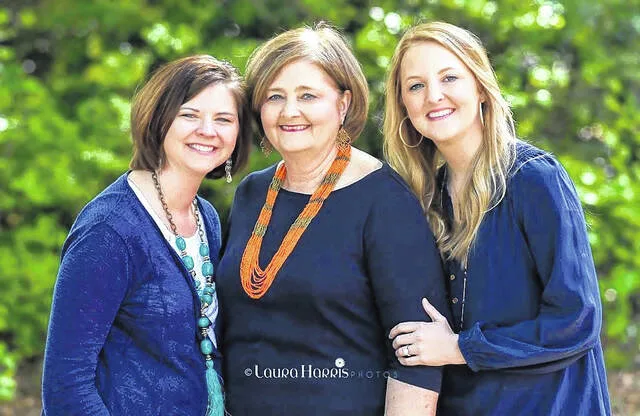
Norris, who had a one-year-old baby at the time, was diagnosed with breast cancer at age 30, and was initially told she had only six months to live. Her sister got a second opinion, and is here today, some 30 years later.
Scronce didn’t tell anyone about what she suspected, but she did ask her sister one question. “I asked her: would you go back to Dr. Graham?”
“I saw the doctor in a matter of weeks and he confirmed what I already knew,” Scronce recalled.
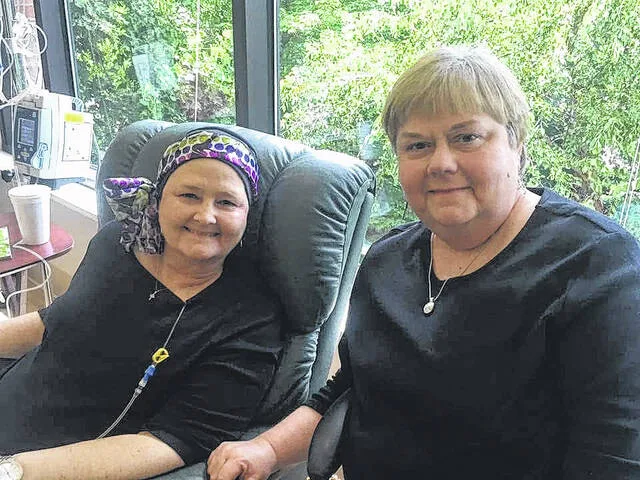
“We made a plan, which involved chemo, to shrink it, surgery to remove it, and radiation to ensure none remained,” Scronce described, naming chemotherapy spanning from April 2014 to November of the same year, with all treatment concluding around one year after her diagnosis, in April 2015.
“My daughter got married a few days (after chemo ended),” Scronce remarked, adding: “we planned a whole wedding during my treatment.”
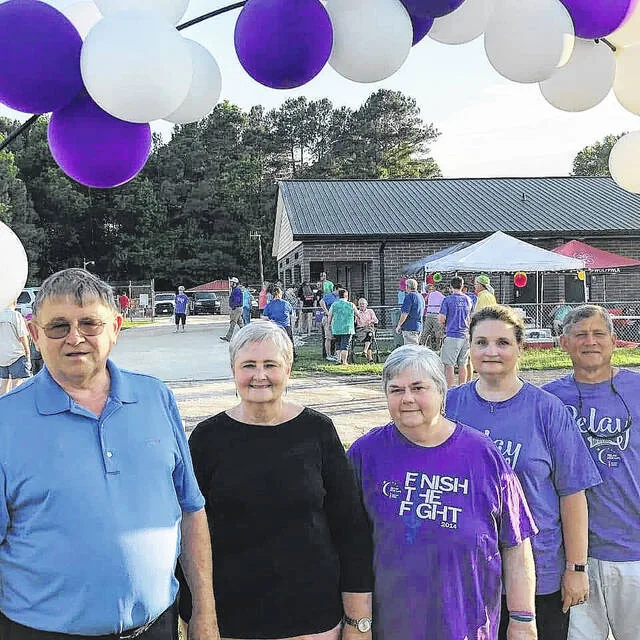
Scronce celebrated 10 years cancer free in April 2025.
“Everyone says ‘I know you were so afraid,’ but I wasn’t,” Scronce reflected about her diagnosis and treatment.
“It is what it is; this is what the test says,” Scronce said matter of factly about her thought process.
Chemo involved one treatment every three weeks for 18 weeks total.
The first treatment was easy. “Is this all?” Scronce recalled asking.
“The second time was tougher,” she remembered.
“Now you’re going to start losing your hair,” her doctor told her around the second treatment.
“My hairdresser told me she’d help me find a wig,” Scronce explained. “I didn’t want one for every day, but for this wedding I’m going to need a wig,” she told her hairdresser.
Find a wig she did, and nobody could tell at the wedding Scronce said, expressing thanks for the blessing.
Each treatment, she said, was harder, and she described the fourth of six as “totally wiping me out.”
“My favorite place to be was my sunroom,” Scronce explained, talking about where she would go during her treatment. She painted the picture of the room, sharing that with four sets of double windows, “you can imagine all you can see outside.”
“Scripture would come back to me, and, I thought, if God looks after everything I’m looking at, I trust He’ll look after me.”
A professed control person, Scronce admitted that she likes “to have a plan”
“If my cancer taught me anything it was that I was not in control,” she attested.
Scronce set the scene of the way she approached life before her diagnosis with a story from a family trip to Disney World when her daughters, Media Scronce Hooks and Megan Scronce Whichello, were growing up. Scronce described how meticulously she planned their time in the park, wanting to ensure her family didn’t miss a single attraction, and how she used the park map to check off each stop.
“One of them, I can’t remember which, finally said ‘Daddy make her throw that map away!’” Scronce described of her daughter’s exasperation at following Mom’s itinerary.
But the survivor sees cancer as what helped her pivot from holding tightly to the map to walking by faith.
“Hard things are what really teach us,” Scronce stressed, sharing that she learned ”through it all there’s a way to handle it.”
During her treatment, Scronce was introduced to a quote:“Life is not about waiting for the storm to pass, it’s about learning to dance in the rain.”
Cancer, she said, was her rain. “And I learned to dance,” she stressed.
Her trips to chemo involved many drives on I-40 with much road construction, and often rain coming down, but she describes all of it as “an amazing part of (her) life.”
Many people can ask “why me?” when tragedy strikes, but Scronce instead asked “why not me?”
“I’m no better than anyone else,” she asserted, describing breast cancer as “a path I would not have chosen, but a path I’m glad I’ve walked.”
The breast cancer survivor said encouraging others who have been diagnosed is one of the primary reasons she is grateful for her experience. “It’s a blessing. It has changed my life in a very positive way. It has made me a different person.”
Scronce encouraged those newly diagnosed with the disease, using the same words her doctor used to encourage her: “treatment has come a long way.”
Her doctor told her breast cancer is like strep throat in that there are different types that respond to different treatments. There are four kinds of breast cancer that require different combinations of chemo, surgery, and radiation.
Scronce tells anyone newly diagnosed two things: “you might have a kind that doesn’t require much of anything,” and “get a second opinion.”
“A good doctor doesn’t care if you get a second opinion,” Scronce stresses to those she talks to, as well as “you need to have some choice,” when it comes to fighting a disease like cancer.
Scronce shared that many have told her they had doubts but didn’t know what to do, and that they tell her they didn’t know how to go about getting a second opinion.
She tells everyone: “you have to be your own advocate,” adding that if her sister, who was told 30 years ago that she had six months to live, had simply listened to her first doctor she wouldn’t be here today.
“My sister was told she’d probably have a heart attack before she’ll have cancer again,” Scronce stressed, explaining what a difference seeing Dr. Graham as a second opinion made for her sister.
Trusting God was what got Scronce through her treatment, so she offers to do Bible study with those newly diagnosed as well if they’re interested. She also sends a song, “Just Be Held” by Casting Crowns. “Everybody will be OK without you coordinating their schedules and making sure they have what they need,” Scronce tells the women who she knows are worried how they’ll keep everything in line for everyone else.
“Oftentimes just being there for someone is what matters most,” Scronce said of how to support someone through cancer treatment, sharing the story of a friend who went grocery shopping for her during her chemo. “I had olives on my list because they were high in Vitamin C. When she came back she had every kind of olive you could imagine.”
“I didn’t know what kind, so I got them all,” Scronce remembered the friend saying, highlighting what the care of her friend in getting the “right” olives meant to her.
Her advice to women.
“Have a mammogram,” Scronce urged. “Now they offer something more like an ultrasound if you’re worried about radiation,” Scronce added.
Get regular breast exams, do self exams, and stay aware,” she stressed, emphasizing that “when you catch it early, there’s less treatment needed.”
“That’s how far it’s come; it’s amazing,” Scronce marveled. “Don’t feel like this is a death sentence.” She stressed how a good oncologist will walk you through.
“Breast cancer awareness is year round, not just October,” Scronce emphasized, urging anyone with concern to always follow up — acknowledging that finding out what’s going on can be scary, but not knowing is scarier because nothing can be done about it.