
Sampson Community College is taking another step toward becoming a leader in agricultural rescue education, with a proposed $250,000 grant that could help develop specialized training for emergency responders in North Carolina and beyond.
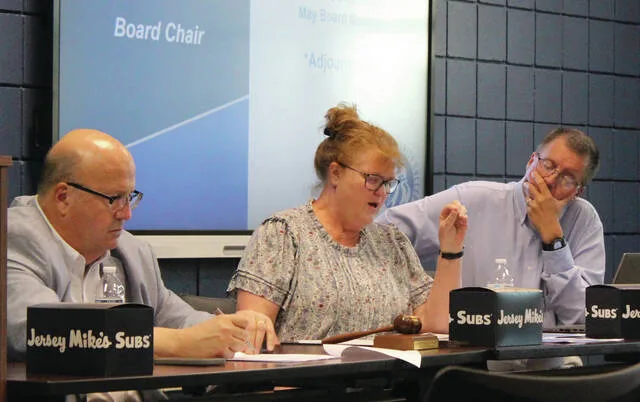
Amanda Bradshaw, vice president of Workforce Development and Continuing Education at SCC, announced during Tuesday’s Board of Trustees meeting that the college was among 10 institutions selected from approximately 30 applicants for a high-cost workforce grant.
The funding, subject to final approval by the State Board of Community Colleges on Friday, would support curriculum development, credentialing and additional training equipment for SCC’s growing AgRescue initiative.
The college previously secured $1.62 million through the North Carolina General Assembly for the initiative, with those funds intended primarily for infrastructure and capital needs.
Bradshaw said the additional funding would address a critical gap in agricultural emergency response training.
Currently, technical rescue instruction exists through the North Carolina Office of State Fire Marshal, but the college identified a need for additional training at the awareness and operations levels.
The awareness level focuses on recognizing agricultural hazards and understanding potential dangers, while operations training would prepare responders to take initial action and stabilize emergency situations before specialized technical rescue teams arrive.
To develop that approach, SCC has partnered with an agricultural safety organization in Marshfield, Wisconsin, that has already developed awareness-level training.
“We’re bringing that curriculum into North Carolina,” Bradshaw told trustees. “The gap is the operations. So we saw a gap and a need, and so we’re working with those folks in Wisconsin now to create the operations curriculum.”
Jim DeMay, SCC’s dean of Public Safety Programs, explained that the Wisconsin partnership will allow instructors to study existing agricultural safety practices and adapt them to North Carolina’s farming operations.
“They already have a curriculum for what we’re calling really more of an awareness for ag safety,” DeMay said. “They do things like pre-planning farms, understanding what farms have and what kind of dangers there are.”
That information, he said, could also help agricultural workers recognize potential hazards and prevent emergencies before they occur.
The operations curriculum would build on that foundation by teaching responders how to handle less complicated rescue situations or stabilize more serious incidents while awaiting additional assistance.
“There’s a gap between that awareness of just understanding what’s going on or what the dangers are and the technician side, which is what the state already offers through the Office of State Fire Marshal,” DeMay explained.
The need is particularly important in rural Sampson County, where specialized rescue resources can be limited.
According to DeMay, only three of the county’s 16 fire departments are classified as heavy rescue departments capable of handling more technical emergencies. One is the paid Clinton Fire Department, while the other two rely on volunteers.
“Our goal is to get everybody trained to awareness, and as many as we can to the operations level, so that they’re better prepared for the local farmers and the industry that we serve,” he said.
Bradshaw emphasized that extended response times in rural communities make that preparation especially valuable.
Some emergencies require technical rescue teams to respond from neighboring counties, leaving local firefighters, emergency medical personnel and law enforcement officers to manage the situation until specialized assistance arrives.
The proposed training would give those initial responders additional tools to recognize dangers, secure scenes and potentially stabilize victims during that period.
“Our county is served mostly by volunteers, and this is going to be really critical for them and really important for them,” Bradshaw told trustees.
Training could reach other states
SCC instructors are expected to visit Wisconsin later this month to observe agricultural rescue training and exchange ideas with their counterparts.
Representatives from Wisconsin are then scheduled to visit Sampson County in January to conduct a train-the-trainer program, preparing local instructors to begin offering awareness-level courses.
DeMay said the college expects to be the first institution in North Carolina to introduce that particular curriculum, although a date for the first locally offered class has not been established.
“We’re going to start local with our people,” he said. “Then we’ll start expanding out to the counties that surround us.”
Development of the operations-level curriculum is expected to take at least six to 12 months, including the creation of learning objectives, instructional materials, practical evaluations and trial classes.
Once completed, the curriculum could be introduced in both North Carolina and Wisconsin, with the possibility of other agricultural states adopting the model.
Bradshaw said the goal is to create a program that can be replicated throughout North Carolina’s community college system and eventually across the country.
“The goal with all of this is to make this particular model replicable across North Carolina and in other states,” she said.
Locally, SCC plans to work with Sampson County Cooperative Extension, the county’s fire chiefs association, emergency management officials and other community partners to identify training needs, coordinate farm safety planning and promote the courses.
DeMay expects interest from other community colleges once the program becomes established.
“We meet regularly as a group for the community college system, so there’s a lot of communication there,” he said. “I have no doubt that it will spread quickly across North Carolina once it’s kicked off.”
For Bradshaw, the initiative represents an opportunity for a rural community college to help address challenges that extend far beyond Sampson County.
By combining existing agricultural safety practices with newly developed rescue training, SCC hopes to create a model that better equips first responders while recognizing the unique challenges facing rural communities.
“We’re excited for this and excited to be able to give this to the world, actually,” Bradshaw told trustees.