
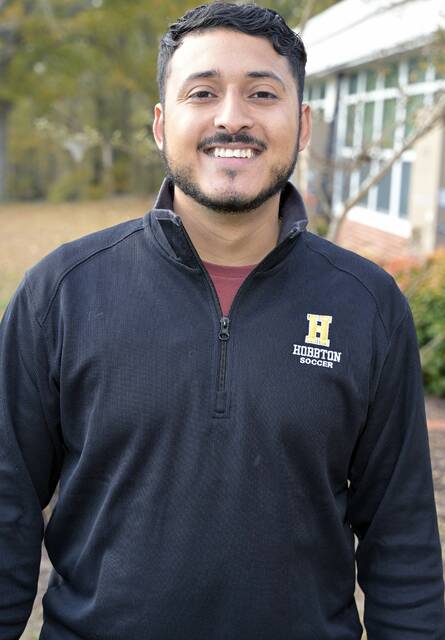


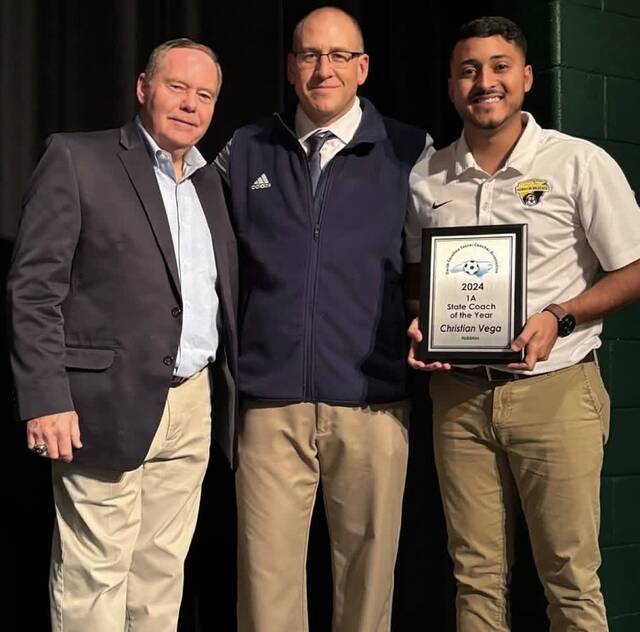
Young leaders do not always begin where they eventually bloom. For Christian Vega, the journey started in the heart of Brooklyn, New York — fast-paced streets, subways rumbling beneath the pavement, parks always alive with movement. He was just 5 or 6 years old when life shifted dramatically. His family relocated south to Newton Grove, trading crowded city blocks for quiet country roads.
“My whole family’s still up there,” Vega shared thoughtfully. ‘It’s just me, my brother, my mom, and my stepdad down here.”
The contrast was immediate.
“It’s way different up there than it is down here,” he reflected with a slight laugh. “Coming from Brooklyn and then moving to the countryside in Newton Grove — it was definitely a culture shock.”
In New York, everything was steps away — family members down the block, the park directly in front of the house, stores around the corner. Transportation required nothing more than a subway ride or a short walk. In Newton Grove, distance demanded planning. A vehicle was necessary. The rhythm slowed.
But over time, that slower Southern pace became something he learned to navigate — and eventually embrace. The energy of Brooklyn sharpened him. The calm of North Carolina grounded him.
Both would later show up in his coaching.
A game that
became life
Soccer was not just a hobby in the Vega household. It was woven into weekends, into conversations, into identity.
“I started playing around 7 or 8 years old,” Vega recalled. “It really came from my stepdad. He was a big fan of soccer. He played it, he refereed games, he commentated championship games here in Clinton, Warsaw, Wallace… and he coached too.”
That meant young Christian did not have much say in how Saturdays and Sundays were spent.
“My whole weekend was soccer activities,” he said with a grin. “Everything related to soccer.”
What started as recreation league games at Grove Park evolved quickly. He joined Sunday leagues with friends from Newton Grove, competing across Clinton, Smithfield, Benson, and beyond. By middle school and high school, the passion remained steady — but during his sophomore year, something shifted.
That was when he met Coach Jonathan Jacobs.
“At first, soccer was just fun,” Vega admitted. “But then it started to become a reality that I could play at the next level.”
Jacobs introduced him to club soccer with Clinton United and exposed him to tournaments across the state, including Greensboro competitions and camps. There, Vega competed against top talent from across North Carolina’s east, west and southeast regions.
“It was great to see that level,” he remembered. “You meet talented players, you see different styles — it pushes you.”
The game stopped being casual.
It became intentional.
The mentor
If Vega’s love for the sport was nurtured at home, his development was sharpened under Jacobs’ leadership.
“Yeah, he’s my mentor,” Vega stated plainly. “I look up to him.”
Ironically, coaching was not the original plan. Vega initially pursued athletic training and physical therapy. But during student teaching, Jacobs made a call that redirected everything.
Before coming to Hobbton, Vega was coaching at J.F. Webb in Oxford. But after reflection, he accepted the responsibility — not just as a professional advancement, but as a return to community.
“He asked if I’d be interested in helping at Hobbton,” Vega recounted. “I said yes — and became an assistant coach. It’s just been up from there.” Jacobs never wavered in his confidence.
When Jacobs eventually departed for Clinton High — the mantle was offered to Vega — returning to the school he once played for.
“I was happy for him,” Vega said. “He gave everything for Hobbton. Without him, we wouldn’t be where we are.”
The decision did not come lightly.
“You want somebody that will care about the program as much as you do,” Jacobs emphasized. “I knew Chris would be the perfect person. He went to Hobbton schools. He’s part of the community.”
He described Vega the same way as a player and a coach.
“As a player, Chris wanted to be the best at everything,” Jacobs noted. “Every drill, every conditioning test — he was determined. As a coach, it’s the same. He wants the best for his team. Hard work pays off.”
Relating in
real time
One of Vega’s greatest assets may be his age.
“I’m young,” he acknowledged. “I can relate to a lot of things they go through. The advice they need — I’m always there for them.”
That relatability bridges gaps that sometimes exist between teenagers and authority figures. He understands the balance — close enough to connect, mature enough to lead.
“Being older helps too,” he admitted. “There’s value in experience. But being young — it’s been good.”
He leans on lessons from Jacobs and from club coaches he played under. He continues developing professionally through United States Soccer Federation coaching courses, learning how to structure sessions, communicate effectively and build players intentionally.
“With club, you know what you’re getting,” Vega explained when comparing systems. “High school is different. You don’t know what freshmen are coming in with.”
Rather than viewing that unpredictability as a setback, he embraces it.
“You build from there,” he said. “In the summer, I focus on what we need. That’s a big part of my coaching style.”
Discipline. Composure. Communication. Accountability.
Those pillars matter more than a single scoreline.
A player’s
perspective
If mentorship defines Vega’s foundation, player testimony defines his impact.
Few understand that impact better than Henry Jorge-Garcia — who played under Vega at Hobbton and with Clinton United.
“I’ve known Coach Vega since my freshman year,” Jorge-Garcia said. “He was an assistant alongside Coach Jacobs and Coach Juan.”
Henry witnessed Vega’s evolution firsthand.
“You could really see the improvement from my freshman year all the way up to my senior year when he actually took over,” he explained. “He’s improved a lot in every aspect. Great coach. Great leader. Motivates us all the time.”
That senior season carried enormous weight.
Hobbton returned to the state championship — marking back-to-back appearances. One under Jacobs. The very next under Vega.
“One thing with Coach Vega,” Henry added, “we started a little bit earlier than we normally did. He knew we had the willpower to go back to the state championship again my senior year.”
Preparation reflected belief.
And belief translated to results.
For Henry, now competing at the collegiate level, Vega’s presence was instrumental in closing his high school chapter.
“He’s been an important part of my journey,” he said. “Finishing out my high school career and now playing at the collegiate level.”
But perhaps the most telling part of Jorge-Garcia’s reflection was the connection.
“Most definitely easier to talk to,” he said of Vega’s age and relatability. “He basically was growing up with us — just in the coach role.”
That shared growth created openness.
“He was always willing to learn,” Jorge-Garcia emphasized. “He’d ask us what we thought about stuff he was trying. We’d give him feedback. He’d give us feedback. That helped the team a lot because we were well connected.”
And when asked whether Hobbton soccer is in good hands?
“Oh, most definitely,” Jorge-Garcia responded without hesitation. “He’s the future of the program. Hopefully, he stays there for a very, very long time. I know he’ll achieve great things again.”
Beyond the
scoreboard
Wins matter. Championships matter.
But for Vega, the deeper goal aligns with what Jacobs once instilled in him — impact.
Beyond wins and losses, he focuses on growth.
He wants disciplined players. Composed competitors. Young men who understand responsibility.
Jacobs summarized it best.
“That’s the goal,” he said. “To make an impact in the lives of the people you coach.”
And perhaps that is the most telling symmetry of all.
The student who once absorbed that lesson now delivers it.
The player who once chased standards now sets them.
The assistant who once learned now leads.
From Brooklyn sidewalks to Hobbton’s pitch, Christian Vega’s story continues unfolding. But if the voices of his mentor and his former player are any indication, his legacy will not be confined to banners or brackets.
It will live in the young men who leave his program prepared — not just to compete, but to lead.
And in the end, that is the true measure of a coach.