
Long before she became one of the nation’s most sought-after basketball recruits, Mikayla Boykin was simply a little girl chasing her older brother around a basketball court.
What began as an innocent desire to follow in his footsteps soon grew into dreams far bigger than either of them could have imagined.
Inspired by her older brother, Michael — now the head varsity boys basketball coach at Clinton High School — Boykin spent countless hours with a basketball in her hands, determined to match his every move. The competitive games between siblings became lessons disguised as fun, molding a relentless work ethic that would eventually transform a child from the community into one of the most recognizable names in girls basketball.
“I always wanted to be like Mike,” Boykin recalled with a smile. Whenever he picked up the basketball, I wanted to pick it up too. I wanted to do everything he could do.”
Basketball wasn’t something that suddenly entered her life, it surrounded her.
Her father, Tim, served as director of the Sampson Center — known throughout Clinton simply as “The Block”— where basketball was more than entertainment. It was an outlet. It was mentorship. It was a place where young people learned discipline, accountability and teamwork while staying away from the dangers that can often lure children growing up in underserved communities.
“It wasn’t something my dad pushed on us,” Boykin reflected. “It was just something we did for fun.”
That environment naturally became the family’s second home.
Alongside her brothers Michael and Marcus, Boykin developed a competitive spirit that often turned ordinary afternoons into spirited battles.
“There were times my mom and dad had to break up games because we were competing so hard,” she laughed. “At the end of the day, though, we knew we were making each other better. We’d talk junk, we’d compete, but we’d hug afterward because we knew we were pushing each other.”
Those backyard matchups became the first chapter of a remarkable basketball journey.
“My dad had an AAU team called the Clinton Ballers,” she explained. “Before that it was called Wingspot, named after one of the local businesses that helped sponsor us. It was mostly boys. The idea was to keep everybody out of the streets and give us something positive.”
For years, she never questioned it. Playing against boys simply became normal.
When her father finally told her it was time to begin playing girls basketball before middle school, she wanted no part of it.
“I was livid,” Boykin admitted with a grin. “I didn’t want to play with the girls because I’d been playing with boys my whole life.”
Looking back, she realizes her father’s vision was far greater than her own.
“He knew that eventually I was going to have to make that transition.”
The adjustment proved to be almost immediate. College coaches began showing up at middle school games, and then they started attending AAU tournaments.
Soon, scholarship offers followed.For a child growing up in Clinton, it all felt surreal.
“I never thought about college that early,” Boykin said. “It was crazy seeing coaches come to middle school games.”
The attention only intensified. Before long, Boykin had become one of the nation’s premier prospects, attracting interest from virtually every powerhouse in women’s college basketball.
What many people celebrated from the outside carried enormous weight for a young teenager trying to balance school, basketball and simply being a kid.
“It became overwhelming,” she acknowledged. “There were times my parents would have to get on phone calls with coaches because I just wanted to go outside and play with my friends.”
The spotlight didn’t stop when games ended.
“There were times we’d go to Walmart or the grocery store and people wanted pictures,” she recalled. “Sometimes we couldn’t even get through the checkout line because people kept stopping us. It got to the point where I’d rather stay home.”
While the basketball world watched one of the country’s brightest young stars emerge, Boykin’s family remained committed to making sure fame never changed who she was.
“I give all the praise to God, but I also give so much credit to my family,” she emphasized. “People forget they were going through it too. My mom, my dad, my brothers, my sister — we all had to adjust to a completely different life.”
That support system became her anchor.Growing up in the community had already taught Boykin lessons that couldn’t be measured in points or trophies.
“I’m built from a different cloth,” she said. “Being from the Block, where I’m from, it teaches resilience. We dealt with things off the court that helped prepare me for everything that came later.”
That perspective helped her navigate national attention without losing sight of her roots.
While recruiting analysts debated rankings and coaches envisioned championships, Boykin focused on something much simpler by doing what she had always done, working on her craft.
The accolades continued to pile up.
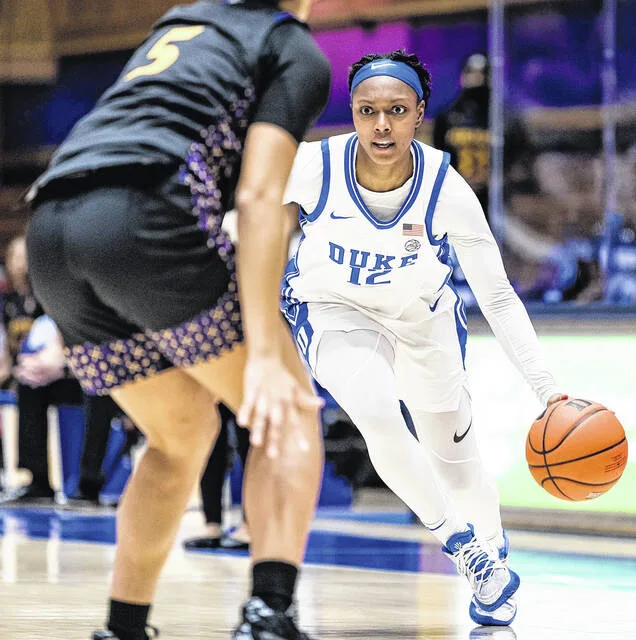
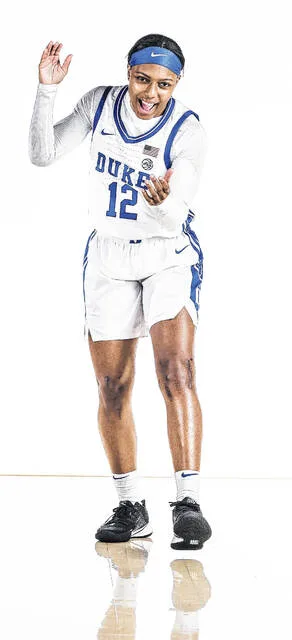
She ascended to the top of national recruiting rankings, becoming the number one player in the country and earning scholarship offers that most young athletes only dream about receiving.Eventually, one opportunity separated itself from the rest: Duke University.
For many, choosing Duke would have been an easy basketball decision, but for Boykin, it represented something much bigger.
“I committed so early because it wasn’t always about basketball,” she explained. “It was about the bigger picture.”
Academics mattered just as much.
She credits Clinton High School teachers, particularly Yvette Bennett, for reinforcing that message throughout her high school career.
“She always reminded me that basketball could only take me so far if I didn’t take my education seriously,” Boykin said. “She made sure I understood that I had to be successful in the classroom, too.”
Those lessons aligned perfectly with the values her parents had instilled years earlier.Basketball could open doors, while education would keep them open.
By the time Boykin graduated from Clinton, she had accomplished nearly everything a young athlete could imagine — she had become one of the nation’s most decorated recruits; she had fulfilled a dream by committing to Duke; and she had inspired countless young girls throughout Sampson County to believe they could chase impossible dreams.
Yet, despite all the recognition, Boykin was about to discover that college basketball would test her in ways no recruiting ranking, packed gymnasium or national spotlight ever could.
The game she had loved since childhood was preparing to teach its greatest lessons — not through victories, but through adversity.
Arriving on the campus of Duke University fulfilled a dream that had been years in the making.But earning a scholarship was only the beginning.
The small-town girl from Clinton suddenly found herself surrounded by some of the nation’s brightest students and elite basketball players. While she had spent years preparing for the competition on the hardwood, she quickly realized there was another adjustment waiting beyond the court.
“It was a culture shock,” Boykin admitted. “Not in a bad way, but I came from a place where everybody knew everybody. At Duke, I had to figure out who I was outside of basketball.”
Like many college freshmen, she found herself searching for her place socially while balancing the demands of one of the country’s premier academic institutions and one of the nation’s top women’s basketball programs.
“I had to learn how to embrace people who didn’t come from where I came from,” she explained. “Outside of basketball, I had to figure out who Mikayla was.”
That journey of self-discovery became just as important as anything she learned inside Cameron Indoor Stadium.
Boykin entered a locker room filled with accomplished players, including All-Americans Lexie Brown and Rebecca Greenwell. Rather than treating the highly touted freshman as another recruit, Brown immediately embraced the role of mentor.
“Lexie took me under her wing,” Boykin recalled. “Whenever she went to the gym, she brought me with her. She showed me what it looked like to perform at a high level every single day.”
Those moments became invaluable.
Every workout, every conversation and every practice added another layer to Boykin’s understanding of what it truly meant to compete among the nation’s elite.
Then, without warning, everything changed. The game that had carried her from Clinton to one of the most prestigious universities in America suddenly stopped.
An ACL tear forced her off the floor.Then came another, followed by others.
By the end of her basketball journey, Boykin had endured five ACL surgeries, spending nearly five full years rehabilitating instead of competing.
“It was tough mentally,” she acknowledged. “I’m not going to sit here and tell you it was easy because it wasn’t.”
For an athlete whose identity had been intertwined with basketball since childhood, losing the game felt like losing a part of herself.
“You take a kid who’s always played basketball and then you just snatch it away,” Boykin reflected. “You start asking yourself, ‘Who am I?’”
Those questions became heavier with each setback.
“It put me in a depression,” she said candidly. “When you’re forced to sit out for a year, you’re left with your thoughts. You’re thinking about more than basketball.”
Yet, somewhere inside the frustration, rehabilitation and uncertainty, Boykin began discovering something she had never been forced to explore before — perspective.
Each injury slowed her down enough to evaluate the person she was becoming rather than simply the player everyone expected her to be.
“I was able to appreciate the game in so many different ways,” she said. “It opened doors that I never would’ve seen if I hadn’t gone through those experiences.”
Determined to continue pursuing the sport she loved, Boykin later spent a stint with the UNC Charlotte 49ers, refusing to allow adversity to write the final chapter of her playing career. Although injuries continued to test her resilience, they also reinforced a lesson she now carries into every aspect of her life: success is about far more than what happens between the lines.
“I don’t regret getting injured,” Boykin said. “I know that sounds crazy to some people, but I don’t. Everything I’ve been through has helped shape who I am.”
That realization eventually became the foundation for her life’s work.
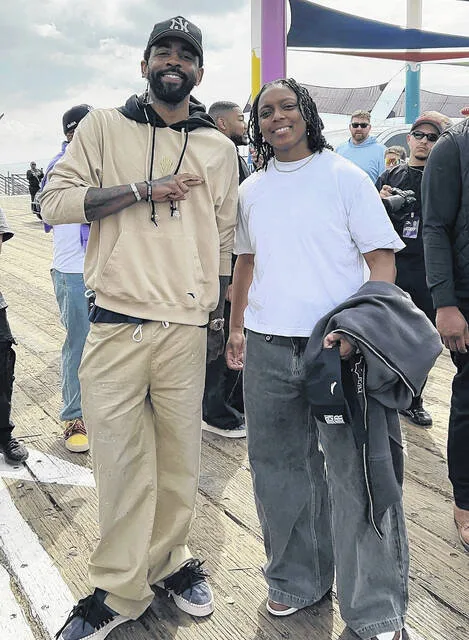
Today, Boykin serves as CEO of MSpire Sports Group, an agency dedicated to helping athletes navigate recruiting, NIL opportunities, branding and life beyond athletics.
The name itself carries a deeper meaning.“The ‘M’ comes from Mikayla,” she said with a smile. “But the bigger part is inspire. That’s what I want to do every day.”
For Boykin, MSpire isn’t simply a business, it’s a mission.
“My whole mindset is, ‘How can I be of service?’” she emphasized. “How can I provide people with resources and opportunities that I wish I had?”
Less than a year after its launch, the agency has already grown to represent collegiate athletes, creators and public figures while partnering with universities and helping young athletes navigate an increasingly complex landscape.
But contracts and endorsements only scratch the surface of what Boykin hopes to accomplish.
“I want people to know who they are outside of basketball,” she explained. “I want them to feel protected. I want them to have somebody they can trust.”
Ironically, the same obstacles that once threatened to derail her basketball career became the very experiences that prepared her to mentor others.
People still ask her about the records she might have broken. They wonder what would’ve happened had her knees never betrayed her.
Boykin doesn’t spend much time wondering.
“A lot of people talk about the ‘what ifs,’” she said. “What if I never tore my ACL? What if I broke more records? But I don’t live life with the what ifs.”
She chooses something far more powerful.“I live life by the ‘nows,’” she continued. “My now is my reality, and I’m super happy where I am today. The what-ifs might sound good on paper, but I’m right where I need to be. This is my purpose.”
That perspective has become the message she shares with every young athlete she encounters.Her advice isn’t centered on jump shots, vertical leaps or scholarship offers.It’s about becoming an “infinite sponge.”
Whether the lesson comes from a coach, a teammate, a parent, a grandparent, a successful business leader or even a child, Boykin believes growth begins with a willingness to listen.“You never know what one sentence or one conversation can do to change your life,” she said.
Years ago, a young child chased her older brother around a basketball court with nothing more than a dream of competing.Today, that same person leads others forward, proving that while basketball may have opened the first door, purpose opened every one that followed.
For Mikayla Boykin, that may be the greatest victory of them all.